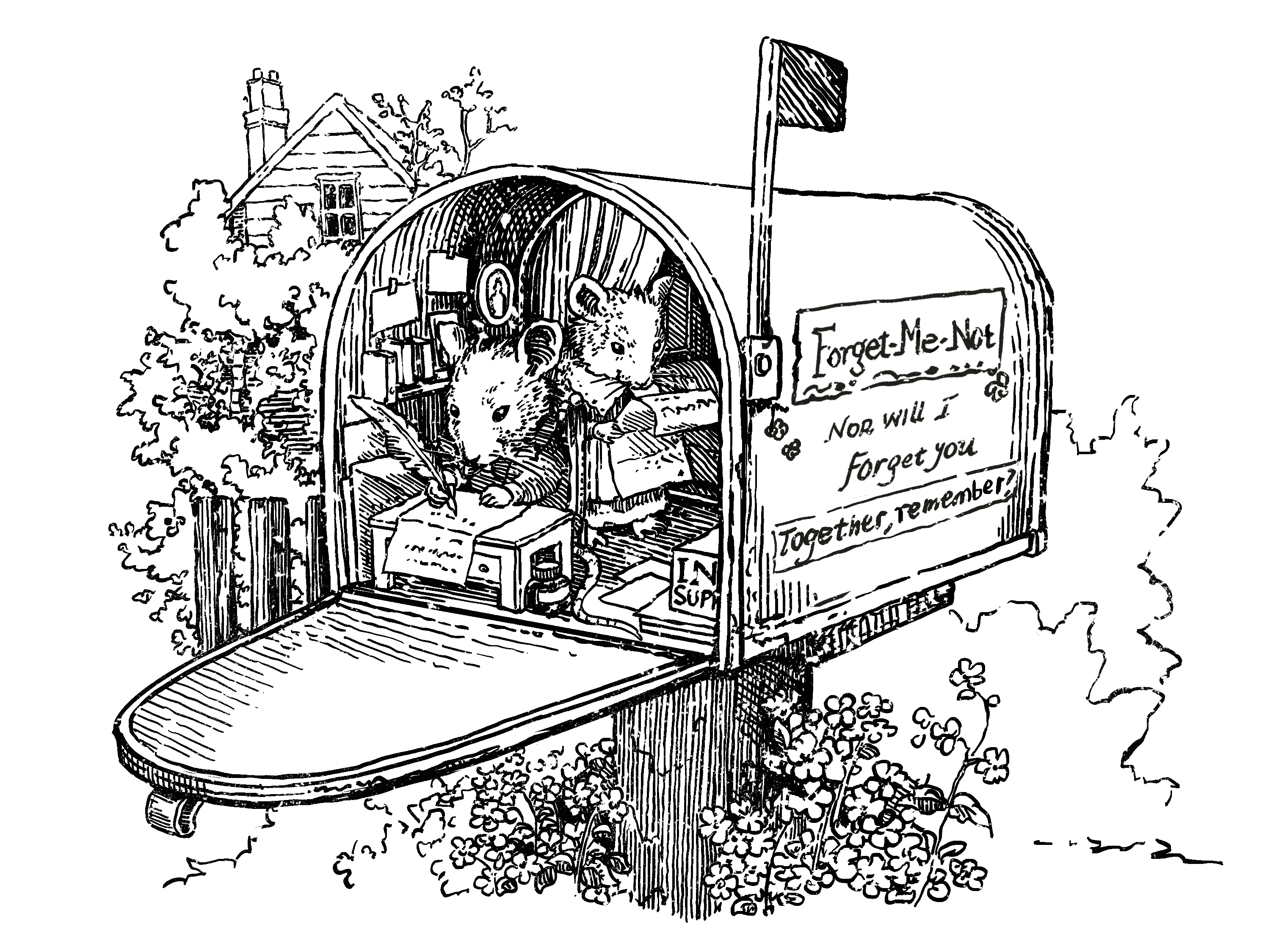
It follows that an abandoned house would have an empty mailbox, but when they made their way inside, something had been left behind. It was a blue seed packet that read, “Forget-Me-Not”. Out of respect they tipped the pack outwards and let the seeds fall. So long had they been waiting that sprouts formed within minutes. Then, without any water and only an afternoon of sunshine, there were blue flowers blooming around the base of the post. The same day, if you had called someone over and pointed, they would have said, “Beautiful, aren’t they? They’ve been there as long as I can remember.”
The two that had found the seeds were mice, and they were writers. Good enough in fact to never waste a word they found. They had taken the name of the flowers from the packet and used a tad of sap to place the words on the door of their new home, having added under it, “nor will I forget you.” One of the mice, Harold, wrote the word “nor” whenever he had the opportunity, while his wife Edith’s favorite word was “together”. She often held it over him as being five letters longer and at least five times better, but then he would just chase her, chanting “nor” over and over again, until she brought a throwable object and his head “together”.
By the end of the first day, the final writing on the door read, “Forget-Me-Not, nor will I forget you. Together, remember?” They both loved the last word, and it might have even been truly each of their favorites, but that often slipped their mind.
How to explain the history of two writer mice? Long before the mailbox and the writing, they had met in the post office. Neither had planned to stay, nor had they intended to be writers, but meeting each other changed both of those intentions. Soon they each had more to say than they could and they turned to the volume of mail that passed through the station to pursue independent study, both learning to read in the hopes that they could satisfy their need to write. They learned quickly, much faster than usual given their romantic motivations, and quickly enough to realize that not once had they read anything sufficient for their own feelings.
One letter came through filled with such lovely intentions, but written so poorly that the two could not resist making some edits before resealing the letter and sending it along. After that they became distracted by their craft, and continued editing love letters as a form of delaying writing to one another and instead sprinkled their emotions among the communications in transit.
It did not take long for people to notice, and a time came when desperate lovers would travel great distances just to ensure that their romantic correspondence passed first through that town. Their efforts were public enough that there were always letters to work on, but remained private enough in the interest of the same lovers seeking assistance that they were never overwhelmed. Occasionally there were small notes of thanks included in the envelopes, or blank sheets of paper to supply the rewrites, or even money that the mice saved, just in case it ever became useful to them.
Rarely there were more specific requests spanning other genres, for example instructions to comb through a series of invoices to identify discrepancies. For all financial inquiries, Harold and Edith began rerouting to a town they believed housed an accounting fox and badger far more suited to the task.